In cold winter conditions, especially during sudden temperature drops accompanied by rain or snow, starting diesel generator sets often becomes a challenge for users across various industries. While ambient temperature is beyond our control, low temperatures pose multiple obstacles to reliable generator startup. However, by mastering the correct methods and operational techniques, diesel generator sets can still be started smoothly and operated reliably under low-temperature conditions. This article provides a detailed overview of key considerations and best practices for winter startup, helping you effectively overcome cold-start challenges.
Under low-temperature conditions, difficulties in starting diesel generator sets mainly arise from the following factors:
- Deterioration of Thermodynamic Conditions: Low temperatures reduce the temperature at the end of the compression stroke. Due to increased clearance between piston rings and cylinder walls, along with intensified heat dissipation, the compression pressure and temperature often fail to reach the diesel self-ignition point. As a result, fuel combustion in the cylinder becomes difficult.
- Changes in Fuel and Lubrication Characteristics: At low temperatures, diesel fuel viscosity increases, cetane number performance may deteriorate, or the pour point may be too high. These factors slow down mixture formation and worsen atomization and evaporation, leading to incomplete combustion and reduced engine power. At the same time, higher lubricant viscosity increases mechanical friction resistance, degrades lubrication between moving parts, and raises starting resistance.
- Decline in Electrical System Performance: Battery electrochemical activity decreases in cold environments, resulting in reduced output power. During startup, insufficient current may be supplied, further aggravating weak or failed starts.
- Increased Mechanical Resistance: Low temperatures increase the movement resistance of mechanical components, especially internal engine parts such as the crankshaft and connecting rods, which require more energy to initiate motion.
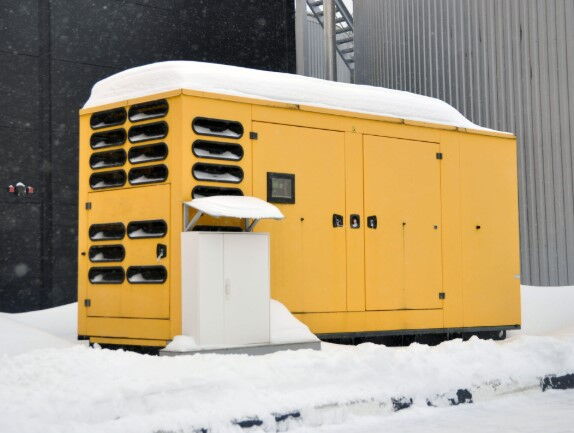
Understanding the causes of cold-start difficulties is important, but mastering practical and effective solutions is even more critical. The following methods address lubrication selection, battery maintenance, heating system utilization, and standardized operating procedures. Together, they form a comprehensive solution for ensuring reliable diesel generator startup in winter.
Under low-temperature conditions, low-temperature viscosity of engine oil is crucial. It is recommended to use 10W or 5W engine oil instead of commonly used 15W oil. These oils have lower viscosity at low temperatures, provide better lubrication between friction surfaces, reduce starting resistance, and facilitate startup.
The battery is the core component of the starting system, and its performance directly affects starting success. In cold environments, battery output current is significantly reduced. Therefore, thermal insulation measures, such as insulated battery boxes or covers, are recommended to ensure normal charging and sufficient current output.
Additionally, battery electrolyte density may be appropriately increased according to ambient temperature changes, and the charging generator regulator should be adjusted to increase charging current, ensuring adequate battery capacity.
Starting fluid has a low ignition point and can ignite quickly even when compression air temperature and pressure are relatively low. It helps ignite diesel fuel in the combustion chamber and facilitates startup. A proper amount of starting fluid may be sprayed into the intake pipe before starting, but usage quantity and frequency must be carefully controlled to avoid cylinder damage.
Heating the intake air raises the gas temperature in the cylinder at the end of compression, improving starting performance. Common methods include using internal or external electric power to energize resistance heating wires installed in the intake pipe.
Preheating coolant, intake air, or using glow plugs to raise combustion chamber temperature can also effectively shorten ignition delay.
Preheating the cooling medium is an effective low-temperature starting method. When ambient temperature is above –30 °C, the following procedure may be used:
Cover the radiator with an insulating blanket, open the drain valve, and continuously pour 60–70 °C clean soft water into the radiator. When the drained water feels hot to the touch, close the drain valve, then fill the radiator with 90–100 °C clean soft water. Rotate the crankshaft to ensure preliminary lubrication of moving parts before starting.
In environments below –40 °C, heating the cooling medium is essential to enable normal startup.
In winter, diesel fuel should be selected according to ambient temperature conditions. The fuel’s pour point should be 7–10 °C lower than the lowest local seasonal temperature. Low-pour-point, high-cetane diesel improves low-temperature fluidity and auto-ignition performance, ensuring proper atomization and combustion.
Low winter temperatures can easily cause overcooling during operation. Therefore, thermal insulation is essential for winter generator use. In northern regions, diesel generators should be equipped with insulation covers and thermal curtains.
Before winter, thermostat operation should be checked and faulty thermostats replaced promptly. In extremely cold areas, antifreeze suitable for local temperatures must be added to the radiator to prevent freezing and cracking of the engine block, radiator, and water pump.
- Check Injectors and Intake Passages: Regularly inspect injectors and intake passages to prevent icing or blockage, ensuring proper fuel injection and mixture formation.
- Check the Lubrication System: Before starting, verify the condition of lubricating oil to ensure proper lubrication and reduced mechanical friction.
- Check the Electrical System: Inspect batteries, charging generators, and related electrical components to ensure they are in good condition and capable of providing sufficient starting current.
- Pre-Startup Preparation: Set the throttle to idle. Turn the control panel key switch from OFF to ON and confirm that the instrument backlight illuminates, indicating power-on. Ensure the fuel supply is open. For units with electronic governors or electronic fuel injection, confirm the controller is operational.
- Startup Operation: Press the start button for no more than 30 seconds. Once the engine starts, release the button immediately. To extend the service life of the battery and starter motor, each starting attempt should ideally last 5–10 seconds. If startup fails, wait an appropriate interval before retrying. Do not attempt more than three consecutive starts, with intervals of at least two minutes. If the unit fails to start after three attempts, conduct a thorough inspection before a fourth attempt. Restarting without identifying the cause is not permitted.
- Post-Startup Inspection: Allow the generator to run smoothly at idle. Check for abnormal noises such as knocking or excessive friction. Monitor oil pressure and coolant temperature on the instrument panel—oil pressure typically ranges from 0.2–0.5 MPa. Coolant temperature should rise gradually; abnormal increases during initial operation require attention. Continue preheating during idle operation; in cold weather, preheating time may be extended to 3–5 minutes. Closely observe fault indicators, oil pressure, water temperature, and check for abnormal noise, vibration, oil leakage, water leakage, or air leakage.
After mastering correct low-temperature starting methods, it is equally important to observe proper operational precautions in winter to ensure stable performance and extend service life.
Never remove the air filter and place burning diesel-soaked cotton or cloth into the intake pipe for ignition-assisted starting. This allows unfiltered dusty air to enter the cylinder, causing abnormal wear of pistons and cylinders and leading to rough operation and equipment damage.
Before shutdown, allow the generator to run at idle until coolant temperature drops below 60 °C and no longer feels hot to the touch. Shutting down too early while temperatures remain high can cause cracking due to thermal expansion and contraction when cold air enters.
When draining coolant, ensure all residual water is completely removed to prevent freezing and cracking of the engine block.
Avoid sudden acceleration or fully opening the throttle during operation, as prolonged aggressive operation shortens valve component life. Continuously monitor generator operating conditions, promptly identify abnormalities, and address issues to ensure stable and reliable operation.
Although starting diesel generator sets in low winter temperatures presents certain challenges, proper selection of engine oil, battery insulation and maintenance, use of starting fluid, heating of intake systems and cooling media, appropriate diesel fuel selection, thermal insulation measures, and correct inspection and maintenance practices can significantly improve cold-start performance. By avoiding improper starting methods and strictly following correct operating procedures and winter precautions, generator service life can be extended while operational efficiency and reliability are enhanced. We hope the methods and recommendations outlined in this article help you confidently handle diesel generator startup in cold winter conditions and ensure stable, safe power supply throughout the season.