
A Complete Guide to Diesel Generator Protection Systems
In today's society, whether in hospitals, data centers, factories, or commercial buildings, diesel generators play an indispensable role as standby or even primary power sources. However, owning a high-performance diesel generator is only the first step. The real challenge lies in ensuring safe, stable, and long-term operation through a well-designed protection system.
This article provides an in-depth yet easy-to-understand explanation of diesel generator protection systems, covering everything from fundamental principles to practical applications. It is designed to help owners, engineers, and operators build a comprehensive understanding of generator protection and enhance the overall reliability of their power supply systems.
A generator is the core device that converts mechanical energy into electrical energy, and its operating condition directly affects the safety and stability of the entire power system. Generator protection refers to the use of various protective devices and measures to continuously monitor, detect, and control generator operation, allowing potential faults to be identified and eliminated in time to prevent equipment damage and power outages.
In real-world applications, diesel generator protection systems serve several critical purposes:
Preventing overload damage: When a generator operates beyond its rated capacity, protective devices monitor parameters such as current and temperature to prevent overheating and equipment failure.
Rapid isolation of short circuits: Short circuits are among the most dangerous faults in power systems. Protection systems must respond within milliseconds to minimize damage.
Ground fault detection: Early identification of leakage currents and grounding abnormalities helps prevent electric shock hazards and equipment damage.
Handling abnormal operating conditions: Automatic responses to issues such as loss of excitation, frequency deviation, and voltage fluctuations ensure system stability.
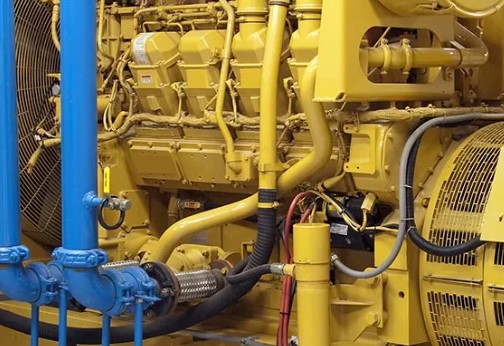
Based on the nature of faults, diesel generator protection is generally divided into two main categories: internal fault protection and abnormal operating condition protection.
Internal faults primarily refer to phase faults and ground faults occurring in the stator windings and excitation (rotor) windings. These faults directly threaten the “heart” of the generator, and improper handling may lead to winding burnout or even total generator failure.
Ground fault protection is essential in addressing such issues. Generators can be grounded using different methods, and the choice depends on the size and complexity of the installation—the larger and more complex the system, the more sophisticated the grounding scheme required. Improper grounding can result in severe, irreparable damage to both the rotor and stator during a ground fault.
Common grounding methods include high-resistance grounding and low-resistance grounding, each with its own application scenarios and protective characteristics.
This category addresses situations where generator operating parameters deviate from normal ranges, including:
Loss of excitation protection: Failure of the excitation system resulting in the loss of magnetic field
Overload protection: Load exceeding the rated capacity
Overvoltage / undervoltage protection: Abnormal output voltage fluctuations
Underfrequency / overfrequency protection: Frequency deviation caused by abnormal engine speed
(Generator frequency formula: Frequency = RPM × Number of Poles / 120. For example, a 4-pole generator running at 1800 rpm produces 60 Hz.)
Out-of-step (loss of synchronism) protection: Loss of synchronism during parallel operation
It is worth noting that not all systems require full synchronism protection. Simple systems supplying lighting or emergency circuits may omit it, while systems feeding critical loads must be equipped with comprehensive abnormal operation protection.
After understanding the overall classification of protection systems, it is essential to examine specific protection mechanisms in detail. Just as a strong defense relies on multiple layers, the safe operation of a diesel generator depends on coordinated protection devices.
From circuit breaker systems that respond to electrical faults, to excitation and frequency protection that maintain stable operation, and reverse power protection that prevents parallel operation accidents—each mechanism has its own working principle and application scope.
Mastering these core concepts not only helps diagnose faults quickly when they occur, but also enables proactive prevention. The following sections analyze these key protection mechanisms in terms of both technical principles and practical application.
Circuit breakers form the first line of defense in generator protection, shielding the rotor and stator from faults on the load side of the circuit. Line or power circuit breakers provide voltage protection, and critical systems are often equipped with redundancy or bypass functions to maintain supply continuity in the event of breaker failure. Switching can be automatic, manual, or a combination of both.
Circuit breakers may fail in two primary ways, which operators must clearly understand:
Failure to close (open failure): After a circuit is restored, the breaker cannot remain closed or trips unexpectedly, interrupting power supply. This “should close but doesn't” condition is often caused by mechanical sticking or control circuit faults.
Failure to open (close failure): Contacts weld together and continue conducting current regardless of the open, closed, or tripped position. This “should open but doesn't” condition is extremely dangerous and can result in unintended energized circuits, electric shock hazards, or equipment damage.
Another severe failure mode is pole flashover (arc explosion). When a breaker is in the open position, contamination, low air pressure, or high humidity may cause flashover between terminals, generating an arc explosion involving intense light and heat, along with a supersonic shock wave. This type of electrical explosion, typically caused by air insulation breakdown, can result in serious injury and catastrophic equipment damage.
Most modern diesel generators use synchronous generators, where electrical energy is produced through the interaction between the rotor magnetic field and the stator armature. The excitation system supplies DC current to the rotor to establish this magnetic field.
Loss of excitation may occur due to:
Unexpected tripping of the excitation circuit breaker
Open or short circuits in the excitation circuit
Loss of excitation power supply
The consequences of loss of excitation are severe. In single-generator operation, the generator will lose its output voltage. In parallel operation, the affected generator will absorb reactive power from the system, operating like an induction motor and potentially overspeeding, leading to overheating and stator winding burnout. Advanced protection systems detect loss of excitation immediately, disconnect the faulty generator, and issue alarms.
Conversely, excessive excitation can cause the generator to inject excessive reactive power into the system, exhibiting capacitive behavior. Protection systems must balance these two extremes to ensure operation within a safe power factor range.
Generator frequency directly reflects engine speed, following the relationship:
Frequency = Speed × Number of Poles / 120
Mechanical failures or sudden load changes can cause speed deviations, resulting in overfrequency (overspeed) or underfrequency (underspeed). Modern protection systems continuously monitor frequency and automatically shed load, shut down the unit, or start standby generators when limits are exceeded.
Synchronism protection is critical for multi-generator parallel operation. All generators supplying a common bus must maintain identical speed, frequency, and phase. Severe system disturbances can cause loss of synchronism, leading to power oscillations and the tripping of multiple generators, potentially resulting in partial or total blackout. Synchronism protection devices monitor parameters such as power angle and slip to provide early warning or automatically separate generators before instability escalates.
When one generator in a parallel system fails, due to prime mover shutdown or fuel interruption, it may stop producing power and instead absorb power from the grid, operating as a motor. This condition is known as reverse power.
A generator operating under reverse power not only fails to contribute but also increases the load on other units and may lead to system collapse. Reverse power protection uses dedicated relays to monitor power flow direction. Once reverse active power is detected, the system immediately trips the generator breaker to prevent motoring operation. This function is standard in modern automatic transfer and paralleling systems.
- Current Protection: The most basic form of protection, continuously monitoring output current magnitude and direction. It responds to overloads (typically 110–120% of rated current), short circuits (sudden current surges), and reverse power conditions.
- Temperature Protection: Temperature is a key indicator of equipment health. Excessive internal temperature accelerates insulation aging and can cause winding failure. Thermistors or thermocouples embedded in stator windings, combined with bearing temperature monitoring, provide comprehensive thermal supervision. When temperature exceeds preset limits (based on insulation class), alarms or shutdown commands are issued.
- Vibration Protection: Mechanical vibration may indicate bearing wear, rotor imbalance, misalignment, or loose components. Vibration sensors monitor amplitude and frequency characteristics, enabling early detection of mechanical issues and preventing catastrophic damage.
- Differential Protection: A high-end protection scheme for stator internal faults. By comparing current at the generator neutral and terminal ends, differential current should theoretically be zero under normal operation. A significant differential current indicates an internal fault, enabling fast and selective protection.
Even with comprehensive protection systems, the following issues may arise in practice:
- False Tripping: Protection devices mistakenly interpret normal operation as a fault, causing unnecessary shutdowns. Causes include overly sensitive settings, external interference, or sensor faults.
- Solutions: Regular functional testing, sensor calibration, proper adjustment of trip thresholds, and installation of filtering to suppress electromagnetic interference.
- Failure to Operate: Protection does not act during actual faults, leading to expanded damage. This may result from device failure, excessively high settings, or protection blind zones.
- Solutions: Periodic testing with simulated faults, recalculation of protection settings, and use of redundant or triple-redundant configurations.
- Improper Parameter Settings: Protection devices are installed but ineffective due to default or incorrect settings that do not match actual generator and system characteristics.
- Solutions: Engage professional engineers to calculate settings based on nameplate data, load characteristics, and system impedance; maintain setting records and update them when loads change.
- Lack of Maintenance: Protection systems are not calibrated or inspected for long periods, leading to failure when needed most.
- Solutions: Implement periodic maintenance plans, including annual comprehensive testing and monthly functional checks; keep protection panels clean and dry; analyze disturbance records after each operation.
To ensure diesel generator protection systems perform as intended, consider the following best practices:
- Layered design: Apply the principle of “fast main protection, time-delayed backup protection,” with redundant protection for critical loads.
- Regular drills: Conduct quarterly protection coordination tests simulating various fault scenarios to verify logic and breaker trip circuits.
- Personnel training: Operators should understand basic protection principles, alarm meanings, and emergency procedures, avoiding blind resets or forced bypassing.
- Documentation management: Maintain complete records of protection settings, wiring diagrams, and trip histories to support fault analysis and system optimization.
- Environmental maintenance: Keep generator rooms well ventilated and dry; regularly clean breaker insulation components to prevent flashover caused by contamination and moisture.
Although diesel generator protection systems do not directly generate electricity, they are the true guardians of power supply continuity and equipment longevity. From grounding protection and circuit breaker redundancy to excitation monitoring and reverse power protection, every link affects the reliability of the entire power system.
Only by fully understanding protection principles, configuring devices appropriately, and rigorously implementing maintenance practices can diesel generators deliver stable output when it matters most, providing a solid power foundation for businesses and society alike.
Investing in a comprehensive generator protection system is an investment in uptime and insurance against catastrophic losses. We hope this guide helps you develop a systematic understanding of diesel generator protection and manage your power equipment with greater professionalism and confidence.
