A Comprehensive Guide to Permanent Magnet Generators
Permanent Magnet Generator is a type of generator that utilizes permanent magnets to produce a magnetic field. Its core characteristic lies in replacing traditional electromagnets with permanent magnets (such as neodymium iron boron and samarium cobalt) to establish the excitation magnetic field. In this type of generator, the permanent magnet serves both as the source of the magnetic field and as an essential component of the magnetic circuit.
Compared with excitation generators, the primary difference lies in how the magnetic field is produced. Excitation generators require an external power supply to energize the field winding and create a magnetic field, whereas permanent magnet generators rely on the inherent magnetism of permanent magnets and can maintain a stable magnetic field without external excitation current.
The magnetic properties of permanent magnets are influenced by various factors, including the manufacturer's production process, the shape and size of the magnet, capacity, and magnetization method. Due to these differences, the specific performance data of permanent magnets often exhibit considerable variability, which is an important consideration when designing and selecting permanent magnet generators.
After understanding the basic structure of permanent magnet generators, we can further explore their core operating mechanism. Thanks to the unique method of establishing the magnetic field through permanent magnets, these generators demonstrate technical characteristics that differ significantly from traditional excitation generators during energy conversion.
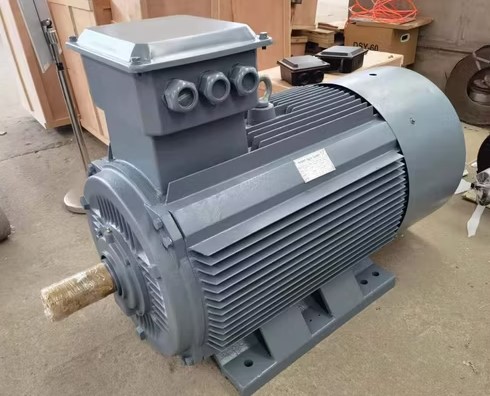
The operating principle of a permanent magnet generator is the same as that of an AC generator, both based on Faraday's law of electromagnetic induction. This law states that when a conductor cuts magnetic flux lines or is placed in a changing magnetic field, an induced electromotive force (EMF) is generated across the conductor. If the circuit is closed, an induced current will flow.
The specific working process is as follows:
- Mechanical Energy Input: The rotor is driven to rotate by an internal combustion engine such as a diesel or gasoline engine, or by another external power source.
- Magnetic Field Rotation: Permanent magnets mounted on the rotor rotate together with it, producing a rotating magnetic field.
- Electromagnetic Induction: The stator windings cut through the magnetic flux lines of the rotating magnetic field, causing the magnetic flux passing through the windings to change periodically.
- Electrical Energy Output: According to the principle of electromagnetic induction, a sinusoidal AC electromotive force is generated in the stator windings and supplied to the load through the output terminals or adjusted via power electronic devices before use.
The commonly referenced Permanent Magnet Synchronous Motor (PMSM) adopts a sinusoidal design. The stator windings typically use three-phase symmetrical sinusoidally distributed windings, or the rotor employs specially shaped permanent magnets to ensure that the air-gap magnetic flux density follows a sinusoidal spatial distribution. When the motor operates at constant speed, the electromotive force induced in the three-phase stator windings is sinusoidal, hence the name sinusoidal permanent magnet synchronous motor.
A sinusoidal PMSM is a typical mechatronic product that includes not only the motor itself but also position sensors, power electronic converters, and drive circuits.
Permanent magnet generators also utilize the principle of minimum magnetic reluctance, which states that magnetic flux always closes along the path with the least reluctance. Based on this principle, the rotating magnetic field generated by the stator produces magnetic attraction that pulls the rotor to rotate synchronously with the magnetic field. This characteristic enables permanent magnet generators to maintain stable synchronous operation.
The structural design of a permanent magnet generator directly affects its performance and application scenarios. Below is a detailed analysis of its core components:
The rotor is the core component responsible for generating the main magnetic field. Common permanent magnet materials include:
Neodymium Iron Boron (NdFeB): High magnetic energy product and cost-effective, but relatively poor temperature resistance.
Samarium Cobalt (SmCo): Excellent high-temperature resistance and suitable for elevated-temperature environments, though more expensive.
Ferrite: Low cost but weaker magnetic performance.
Magnetic Pole Arrangement: Radial arrangement, tangential arrangement, or Halbach arrays can be used to optimize magnetic field distribution.
Permanent Magnet Installation:
Magnets can be directly bonded to the rotor surface, offering a simple structure, though centrifugal forces must be considered at high speeds. Epoxy resin or metal sleeves are typically used for reinforcement.
Magnets may also be embedded within the rotor core, providing high mechanical strength and suitability for high-speed applications.
Rotor Core: Laminated from silicon steel sheets, its main function is to support the magnetic circuit, enhance magnetic guidance, and reduce eddy current losses.
Shaft: Manufactured from high-strength alloy steel and precision-machined to ensure rotational balance. It works with bearings to transmit mechanical power.
The stator generates electrical energy by cutting the rotor's magnetic field, and its design directly influences output voltage and efficiency.
Stator Core: Typically made from laminated silicon steel with insulated surfaces to minimize iron losses.
Slot Design:
Open slots – easy winding and simple manufacturing
Semi-closed slots – reduced harmonics and better performance
Closed slots – highest efficiency but more complex manufacturing
Stator Windings:
Concentrated windings are wound around a single tooth, simple in process and suitable for low-power motors.
Distributed windings are spread across multiple slots, providing more uniform magnetic distribution and higher efficiency, commonly used in medium and large generators.
Winding Connections: Star (Y) or delta (△) configurations can be adopted, influencing voltage and current characteristics. The winding ends must be securely fixed and well insulated to prevent wear or short circuits caused by vibration.
The housing is typically made from aluminum alloy or cast iron and serves several functions: securing the stator, supporting bearings, and providing protection against dust and moisture with a certain IP protection rating.
Depending on power rating and application environment, cooling methods include:
Natural Cooling: Small generators dissipate heat through housing fins, featuring a simple structure and no additional energy consumption.
Forced Air Cooling: Built-in fans or external blowers are commonly used, such as in electric vehicle drive motors.
Liquid Cooling: Water or oil cooling pipelines integrated within the housing are used in high-power and high-temperature scenarios, such as wind turbines.
Deep Groove Ball Bearings: Highly versatile and widely used.
Cylindrical Roller Bearings: High load capacity, suitable for heavy-duty applications.
Seal design is critical to prevent lubricant leakage and contaminant ingress, especially in humid or dusty environments.
Permanent magnet generators eliminate brushes and slip rings, achieving maintenance-free operation through electronic commutation (for example, when paired with inverters). This design is commonly used in new energy vehicle motors and significantly improves reliability and service life.
To prevent irreversible demagnetization of permanent magnets during high temperatures or short circuits, soft magnetic materials (such as low-carbon steel) are added to the magnetic circuit to divert reverse magnetic fields and protect magnetic performance.
Structural Complexity: Permanent magnet generators eliminate carbon brushes and slip rings, resulting in a simpler overall structure. This reduction not only decreases the number of components but also avoids common failures such as burned excitation windings, broken wires, and slip ring wear, significantly improving reliability.
Size and Weight: With a well-designed rotor structure, permanent magnet generator sets are more compact. At the same power level, they are typically smaller and lighter than excitation generators.
Low-Speed Performance: At equivalent power ratings, the output power of a permanent magnet generator at idle is twice that of an excitation generator. This means the effective power rating is higher, particularly under low-speed conditions.
Charging Characteristics: Permanent magnet generators use open-circuit rectification output combined with small-current pulse charging. Compared with traditional charging methods, this approach delivers better charging performance under the same current conditions and helps extend battery life.
Energy Efficiency: As energy-saving products, permanent magnet generators eliminate excitation power requirements and mechanical losses associated with brushes and slip rings. Their energy conversion efficiency is greatly improved, typically exceeding 90%.
Starting Characteristics: Featuring a self-starting voltage regulator design, permanent magnet generators require no external excitation power. They begin generating electricity as soon as they rotate, offering fast response and simple operation.
Environmental Adaptability: The brushless and slip-ring-free structure makes them particularly suitable for humid or dusty environments. Additionally, the absence of brush–slip ring friction eliminates radio interference, improving electromagnetic compatibility.
Limitations in Magnetic Field Regulation: Once manufactured, permanent magnet generators can maintain their magnetic field without external energy, but adjusting and controlling the field externally is extremely difficult. Output voltage regulation usually depends on external power electronic devices.
Temperature Sensitivity: If the generator operates at excessively high or low temperatures, armature reactions caused by surge currents may lead to irreversible demagnetization, reducing performance or even rendering the machine unusable.
Cost Factors: Due to the relatively high price of rare-earth permanent magnet materials, manufacturing costs are generally higher than those of electrically excited generators. However, considering reduced operating and maintenance expenses along with higher efficiency, the total lifecycle cost may be more advantageous.
High Efficiency: The absence of excitation losses is one of the most significant advantages. Since no electrical energy is required to establish the magnetic field, energy conversion efficiency is greatly enhanced, contributing to energy savings.
Low Maintenance Cost: By eliminating wear-prone components such as brushes, slip rings, and excitation systems, maintenance workload and costs are significantly reduced—especially beneficial in applications where frequent maintenance is impractical.
High Reliability: Simplified structures mean fewer failure points. Without burned field windings, broken wires, or slip ring wear, overall reliability improves and the mean time between failures is extended.
Compact Design: Ideal for space-constrained applications such as new energy vehicles, unmanned aerial vehicles, and portable power generation equipment.
Excellent Dynamic Performance: With a constant magnetic field, permanent magnet generators exhibit outstanding dynamic response and can quickly adapt to load changes.
Material Cost: Rare-earth permanent magnet materials, especially high-performance NdFeB, are expensive, representing a major factor limiting widespread adoption.
Temperature Constraints: High temperatures or strong reverse magnetic fields may cause demagnetization, affecting generator performance. Proper thermal management and magnetic circuit protection are therefore essential.
Non-Adjustable Magnetic Field: The fixed magnetic field strength cannot be altered like in excitation generators by adjusting excitation current, so output voltage control requires external converters.
Risk of Demagnetization: Under extreme operating conditions, such as severe surge currents or excessive temperatures, irreversible demagnetization may occur, permanently degrading generator performance.
As an advanced power generation device, the permanent magnet generator has been widely adopted in fields such as renewable energy, electric vehicles, and wind power due to its high efficiency, strong reliability, and compact structure. Although it faces challenges such as high material costs and difficulty in magnetic field regulation, ongoing advancements in permanent magnet materials and power electronics are expected to further expand its application prospects.
Understanding the working principles and structural characteristics of permanent magnet generators helps ensure proper selection, operation, and maintenance in practical applications, enabling their technical advantages to be fully leveraged to meet diverse power demands.