
Diesel Generator Power Factor: Principle, Impact & Optimization
In modern industrial and energy systems, diesel generator sets serve as critical power supply equipment, and their operational efficiency and stability directly affect the continuity of production and daily life. Power factor, as an important indicator measuring the efficiency of electrical energy utilization, plays a crucial role. It not only reflects the generator's ability to deliver active power to the load but also directly relates to reactive power consumption, equipment temperature rise, and the stability of the power grid. Proper understanding of the principles of power factor, its influencing factors, and improvement methods is of great significance for optimizing generator operation, extending the lifespan of a diesel generator set, and ensuring the reliability of the power system. This article starts from the definition and basic principles of power factor, systematically explores its impact on generator operation, and practical optimization strategies, providing a comprehensive reference for relevant technical personnel.
Power factor is a key coefficient measuring generator efficiency, usually expressed as cosθ or cosΦ (cosφ). It reflects the ratio between active power and apparent power, i.e.,
Power Factor (F) = Active Power (P) / Apparent Power (S) = cos θ
Active power refers to the power actually consumed by the load, while apparent power is the product of voltage and current, consisting of both active power and reactive power.
The performance of power factor varies under different load conditions. For purely resistive loads, such as lighting equipment or electric heaters, voltage and current are in phase, with a phase difference θ = 0°, at which point active power equals apparent power, and power factor φ = 1. For purely capacitive loads, current leads voltage by 90° (θ = 90°), and for purely inductive loads, current lags voltage by 90° (θ = -90°), in both cases power factor φ = cosθ = cos90° = 0, meaning active power is zero. Thus, the nature of the load determines the magnitude and type of power output from the source, and power factor is an important parameter representing the nature and size of the load.
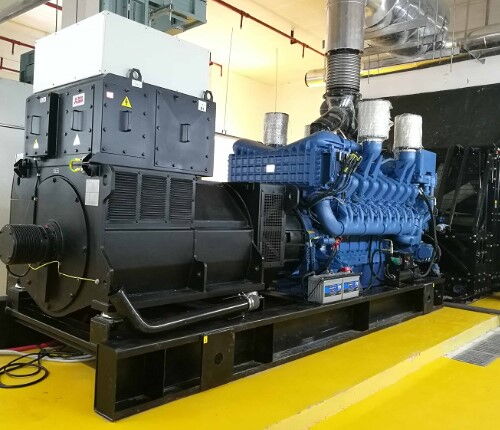
The level of power factor has a significant impact on generator operation. A low power factor indicates a large amount of reactive power, which reduces equipment utilization and increases line power losses. Excessive reactive power causes an increase in excitation current, leading to higher temperatures in the stator and rotor of the generator. If the temperature is too high, it may threaten insulation and affect the generator's service life. In addition, a low power factor also raises the generator terminal voltage, increases magnetic flux density in the core, and further elevates losses and temperature, accelerating equipment aging and increasing the risk of faults.
Conversely, an excessively high power factor reduces the reactive power output from the generator, lowering terminal voltage and reducing operational stability, which can easily cause generator step-out or abnormal operation. Under full load, a high power factor reduces the system's reactive margin, and in the event of a sudden incident, the generator may not withstand minor disturbances or oscillations, potentially leading to unstable operation or even a power system collapse. Additionally, a high power factor increases the possibility of leading operation, causing the generator's engine terminal to heat up and affecting normal operation.
To ensure stable operation of diesel generator sets, the generator's power factor generally should not exceed a lagging 0.95, or the reactive load should not be less than one-third of the active load. When the generator's automatic excitation adjustment device is in operation, it can, if necessary, run for a short period at a power factor of 1.0, but long-term operation can cause generator oscillation and step-out. Therefore, in practical operation, it is necessary to closely monitor changes in power factor and make timely adjustments to ensure that the generator operates within a reasonable power factor range.
The magnitude of the power factor is closely related to the nature of the circuit load. Different electrical equipment has different load characteristics, leading to variations in power factor. For example, the power factor of a resistive load is 1, while the power factor of inductive loads (such as motors, air compressors, and air conditioners) is usually less than 1. This is because inductive loads generate reactive power during operation, creating a phase difference between current and voltage, thereby reducing the power factor.
In addition to load characteristics, the design and manufacturing of the generator also affect the power factor. During the design and manufacture of diesel generator sets, it is necessary to ensure proper matching between the diesel engine and generator in terms of both power and speed. If the matching is inappropriate, it may lead to a decrease in power factor, affecting the performance and efficiency of the generator set.
To improve the power factor of diesel generator sets, the following approaches can be taken:
Asynchronous motors are commonly used in many industrial devices, and their operating condition significantly affects power factor. By improving the maintenance quality of asynchronous motors, normal operation can be ensured, reducing the generation of reactive power and thereby improving power factor. During maintenance, each component of the motor, such as the stator, rotor, and bearings, should be carefully inspected to promptly identify and repair potential faults, ensuring efficient operation.
Proper use of motors is also an effective method to improve power factor. In practice, the motor type and power should be selected according to the size and nature of the load, avoiding overloaded or lightly loaded operation. Overload operation increases motor temperature, reduces lifespan, and negatively affects power factor, while light load operation lowers efficiency and increases reactive power consumption. Additionally, variable frequency drive (VFD) technology can adjust motor speed automatically according to load changes, achieving energy savings while improving power factor.
For large mechanical equipment running at a constant speed for extended periods, synchronous motors can be considered. The active power of a synchronous motor depends on the mechanical load, while reactive power depends on the excitation current in the rotor. In an under-excited state, the stator windings absorb reactive power from the grid; in an over-excited state, the stator windings supply reactive power to the grid. By properly adjusting excitation current, synchronous motors can operate at optimal conditions, improving the power factor of the grid.
Transformer capacity and operation mode also have an important impact on grid power factor. For transformers with low load rates, methods such as reconnection, replacement, parallel operation, or shutdown can increase the load rate and improve the natural power factor of the grid. Proper selection of transformer capacity and avoiding overload or light load operation can effectively reduce reactive power loss, improving the efficiency and stability of the entire power system.
During the daily operation of diesel generator sets, it is necessary to adjust the power factor in a timely manner to keep it within a reasonable range. If the power factor is below the rated value, the generator output should be reduced to avoid overheating and faults caused by excessive reactive power. Regular inspection of generator parameters, such as excitation current, stator current, and rotor current, should be conducted to ensure normal operation. Additionally, reactive compensation devices, such as capacitor banks, can be installed to compensate reactive power and improve grid power factor.
In practical applications, improving power factor requires not only the above technical measures but also attention to the following:
Whether it is generators, motors, or other electrical equipment, regular maintenance and inspection are essential. Timely detection and repair of equipment faults can ensure normal operation, reduce reactive power generation, and improve power factor. Regular maintenance also extends equipment lifespan, reduces failure rates, and enhances the reliability and stability of the power system.
Reactive compensation devices are an effective means to improve power factor, but they need to be configured according to the specific conditions of the grid. Excessive or insufficient compensation may adversely affect grid operation. Therefore, when installing reactive compensation devices, precise calculations and configurations should be made based on the load size, load characteristics, and grid voltage and current parameters to ensure optimal performance.
The professional quality and operational skills of operators have a significant impact on the efficiency and power factor of generator sets. Therefore, operator training and management should be strengthened to improve their expertise and operational skills. Operators should be familiar with generator operation principles and procedures, able to detect and handle abnormal conditions promptly, ensuring stable operation within a reasonable power factor range.
Power factor is an important indicator of generator efficiency, directly affecting the operation of generator sets and the stability of the entire power system. By thoroughly understanding the definition, influencing factors, and methods to improve power factor, effective measures can be taken to optimize generator operation, enhance power factor, achieve energy savings, extend equipment lifespan, and ensure stable power system operation. In practical applications, attention should be paid to equipment maintenance and inspection, proper configuration of reactive compensation devices, and operator training and management to ensure generator sets operate in optimal conditions, providing reliable power support for societal development.
Although power factor is a simple coefficient, it embodies complex electrical principles and significant practical importance. This article aims to help readers better understand power factor, master methods to improve it, and apply them effectively in practice, contributing to the efficient operation of the power system.
